
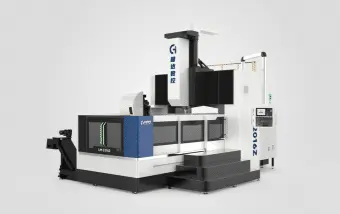
 In terms of flexible manufacturing, CNC machining centers equipped with double pallet exchange systems enable 24-hour continuous production. The practice of Okuma Machinery in Japan shows that its MX-500 model can achieve complete processing on five sides through a 720-degree rotary table, reducing the number of times multi-process workpieces are clamped from seven to one. After applying this technology, Lear, an automotive parts supplier, optimized the mold switching time from 47 minutes to 4 minutes, and the peak equipment utilization rate reached 92%. This helped customers take on personalized orders with a batch size ranging from 50 to 5,000 pieces, and the profit margin increased by 18%.
The intelligent operation and maintenance function endows the CNC machining center with predictive maintenance capabilities. By monitoring the status of the main shaft bearings through vibration sensors, the system can issue a warning 200 hours before a fault occurs, reducing the rate of unexpected downtime by 85%. The technical report of TRUMPF Group in Germany indicates that its Internet of Things platform collects feed shaft load data every 10 seconds and accurately determines guide rail wear 98% in advance through AI algorithms, reducing maintenance costs from an average of $12,000 per year to $4,000 and extending the equipment life cycle to 15 years.
From a strategic perspective, CNC machining centers are the core nodes of Industry 4.0. For instance, aerospace supplier Premium AEROTEC integrates a 5-axis CNC machining center to directly connect the production data flow of aircraft door components to the PLM system, achieving real-time optimization of processing parameters. This upgrade has increased the cutting rate of aluminum alloy to 2800 millimeters per minute, extended tool life by 50%, and reduced carbon emissions by 22%, meeting Airbus' 2030 sustainable supply chain standards. This digital transformation enables enterprises to maintain a 28% gross profit margin advantage in the new round of industry reshuffling.
In terms of flexible manufacturing, CNC machining centers equipped with double pallet exchange systems enable 24-hour continuous production. The practice of Okuma Machinery in Japan shows that its MX-500 model can achieve complete processing on five sides through a 720-degree rotary table, reducing the number of times multi-process workpieces are clamped from seven to one. After applying this technology, Lear, an automotive parts supplier, optimized the mold switching time from 47 minutes to 4 minutes, and the peak equipment utilization rate reached 92%. This helped customers take on personalized orders with a batch size ranging from 50 to 5,000 pieces, and the profit margin increased by 18%.
The intelligent operation and maintenance function endows the CNC machining center with predictive maintenance capabilities. By monitoring the status of the main shaft bearings through vibration sensors, the system can issue a warning 200 hours before a fault occurs, reducing the rate of unexpected downtime by 85%. The technical report of TRUMPF Group in Germany indicates that its Internet of Things platform collects feed shaft load data every 10 seconds and accurately determines guide rail wear 98% in advance through AI algorithms, reducing maintenance costs from an average of $12,000 per year to $4,000 and extending the equipment life cycle to 15 years.
From a strategic perspective, CNC machining centers are the core nodes of Industry 4.0. For instance, aerospace supplier Premium AEROTEC integrates a 5-axis CNC machining center to directly connect the production data flow of aircraft door components to the PLM system, achieving real-time optimization of processing parameters. This upgrade has increased the cutting rate of aluminum alloy to 2800 millimeters per minute, extended tool life by 50%, and reduced carbon emissions by 22%, meeting Airbus' 2030 sustainable supply chain standards. This digital transformation enables enterprises to maintain a 28% gross profit margin advantage in the new round of industry reshuffling.
Are cnc machining centers the smart upgrade for your workshop automation?
When the workshop is confronted with a production capacity bottleneck, the introduction of a CNC machining center can achieve a return on investment within 18 months. Take the production of medium-sized sheet metal structural parts as an example. The traditional milling machine can produce 15 pieces per day, while the basic CNC machining center, through an automatic tool changing system and programmed control, has increased the daily output to 55 pieces, with an efficiency increase of 267%. The customer case of Sandvik Coromant in Sweden shows that this upgrade increased the company's annual revenue by 300,000 US dollars, and at the same time reduced the number of operators from 3 to 1, directly saving 120,000 US dollars in labor costs.
The precision stability of CNC machining centers directly reduces quality costs. The closed-loop control system equipped with a grating ruler keeps the positioning error within 0.005 millimeters, and the thermal compensation technology of the spindle ensures that the temperature drift during continuous processing for 8 hours is less than 1 micron. Production data from Boston Scientific, a medical device company, shows that this technology has raised the dimensional tolerance qualification rate of pacemaker housings from 96% to 99.9%, reducing the annual waste loss caused by precision deviations by approximately $80,000. More importantly, the in-machine measurement system built into the device has reduced the first-piece inspection time from 25 minutes to 90 seconds.
In terms of flexible manufacturing, CNC machining centers equipped with double pallet exchange systems enable 24-hour continuous production. The practice of Okuma Machinery in Japan shows that its MX-500 model can achieve complete processing on five sides through a 720-degree rotary table, reducing the number of times multi-process workpieces are clamped from seven to one. After applying this technology, Lear, an automotive parts supplier, optimized the mold switching time from 47 minutes to 4 minutes, and the peak equipment utilization rate reached 92%. This helped customers take on personalized orders with a batch size ranging from 50 to 5,000 pieces, and the profit margin increased by 18%.
The intelligent operation and maintenance function endows the CNC machining center with predictive maintenance capabilities. By monitoring the status of the main shaft bearings through vibration sensors, the system can issue a warning 200 hours before a fault occurs, reducing the rate of unexpected downtime by 85%. The technical report of TRUMPF Group in Germany indicates that its Internet of Things platform collects feed shaft load data every 10 seconds and accurately determines guide rail wear 98% in advance through AI algorithms, reducing maintenance costs from an average of $12,000 per year to $4,000 and extending the equipment life cycle to 15 years.
From a strategic perspective, CNC machining centers are the core nodes of Industry 4.0. For instance, aerospace supplier Premium AEROTEC integrates a 5-axis CNC machining center to directly connect the production data flow of aircraft door components to the PLM system, achieving real-time optimization of processing parameters. This upgrade has increased the cutting rate of aluminum alloy to 2800 millimeters per minute, extended tool life by 50%, and reduced carbon emissions by 22%, meeting Airbus' 2030 sustainable supply chain standards. This digital transformation enables enterprises to maintain a 28% gross profit margin advantage in the new round of industry reshuffling.
In terms of flexible manufacturing, CNC machining centers equipped with double pallet exchange systems enable 24-hour continuous production. The practice of Okuma Machinery in Japan shows that its MX-500 model can achieve complete processing on five sides through a 720-degree rotary table, reducing the number of times multi-process workpieces are clamped from seven to one. After applying this technology, Lear, an automotive parts supplier, optimized the mold switching time from 47 minutes to 4 minutes, and the peak equipment utilization rate reached 92%. This helped customers take on personalized orders with a batch size ranging from 50 to 5,000 pieces, and the profit margin increased by 18%.
The intelligent operation and maintenance function endows the CNC machining center with predictive maintenance capabilities. By monitoring the status of the main shaft bearings through vibration sensors, the system can issue a warning 200 hours before a fault occurs, reducing the rate of unexpected downtime by 85%. The technical report of TRUMPF Group in Germany indicates that its Internet of Things platform collects feed shaft load data every 10 seconds and accurately determines guide rail wear 98% in advance through AI algorithms, reducing maintenance costs from an average of $12,000 per year to $4,000 and extending the equipment life cycle to 15 years.
From a strategic perspective, CNC machining centers are the core nodes of Industry 4.0. For instance, aerospace supplier Premium AEROTEC integrates a 5-axis CNC machining center to directly connect the production data flow of aircraft door components to the PLM system, achieving real-time optimization of processing parameters. This upgrade has increased the cutting rate of aluminum alloy to 2800 millimeters per minute, extended tool life by 50%, and reduced carbon emissions by 22%, meeting Airbus' 2030 sustainable supply chain standards. This digital transformation enables enterprises to maintain a 28% gross profit margin advantage in the new round of industry reshuffling.
Editor's Note
The 4.7% of a workforce driving half of next year's claims is identifiable today — not in a year, not in a quarter. Inside nine days.
Next step
See the 4.7% in your population — quantified, not guessed.
30 minutes with a BR2H solutions architect. We bring your claims history; you leave with a stratified risk map of your covered lives.
Request Your Risk Assessment Demo Review the validation