
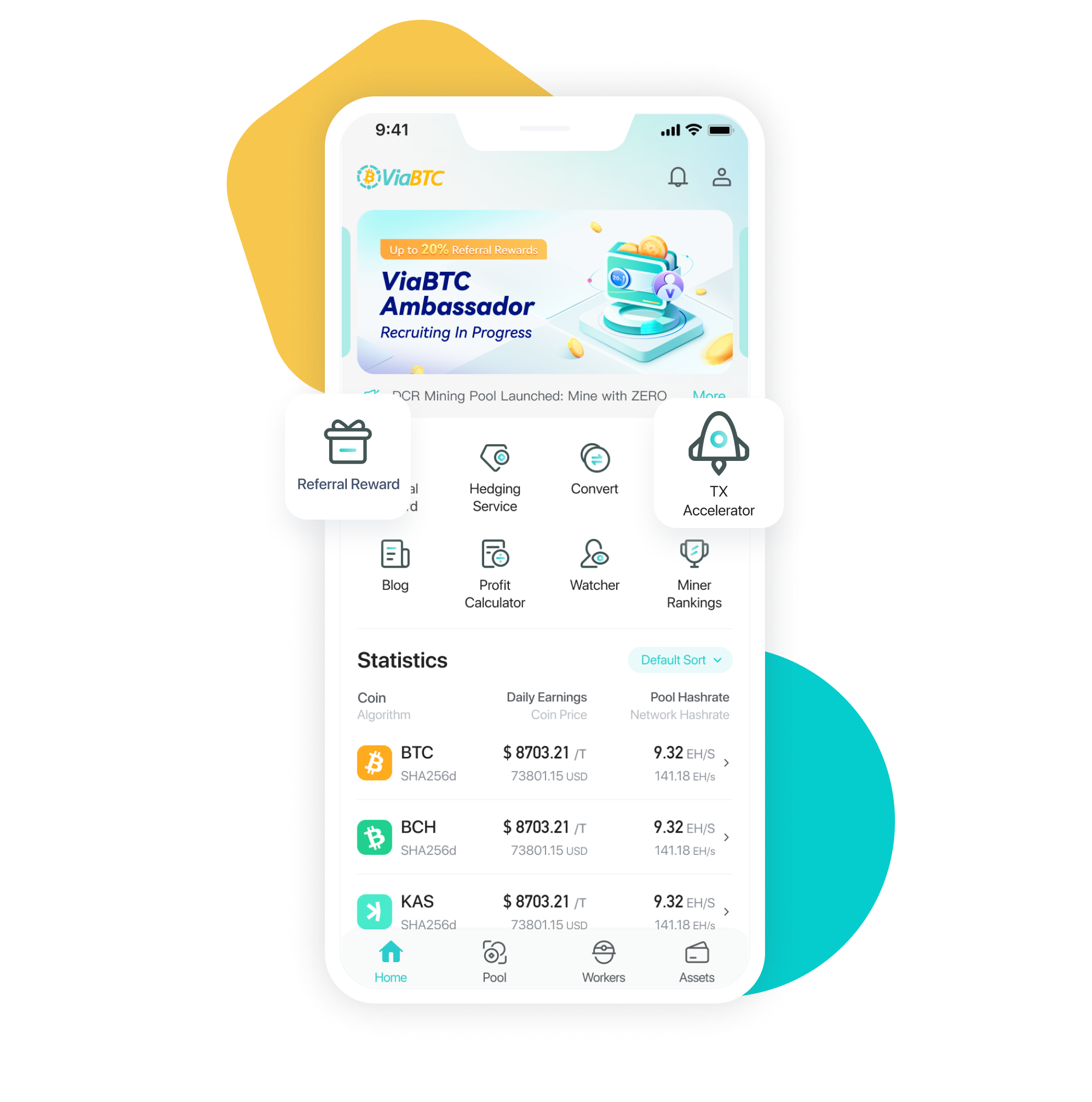
Yes. ViaBTC TX Accelerator can shorten the waiting time of an eligible Bitcoin transaction by giving it priority when ViaBTC, or a participating pool under the paid service, prepares a block. The service does not create faster Bitcoin blocks or guarantee confirmation within 10 minutes. Its current free-submission rules require a transaction size of no more than 0.5 KB and a fee rate of at least 0.0001 BTC/KB, equal to about 10 sat/vB. A transaction paying 40%–70% below the fee rates currently entering blocks may therefore gain more from acceleration than one already close to the next-block range.
Bitcoin has operated since 2009 with a block interval designed around an average of roughly 10 minutes, but “10 minutes” is not an appointment. One block can arrive in 3 minutes and another can take 25 minutes. A transaction sent at 12 sat/vB may therefore remain pending even after several blocks if miners can fill their available block space with transactions paying 20, 30, or 50 sat/vB. The waiting period comes from both mining randomness and competition for block space.
That fee competition explains why the absolute fee alone gives an incomplete picture. A 500-vB transaction paying 10,000 satoshis has a 20 sat/vB fee rate, while a 200-vB transaction paying 8,000 satoshis has a 40 sat/vB rate. The second sender spends 20% less in absolute satoshis but offers miners twice as much revenue per unit of virtual block space. When demand is high, the 40 sat/vB transaction will usually be more attractive.
Bitcoin miners can select from large numbers of valid pending transactions, so lower-fee transactions move farther back when demand rises. A wallet may estimate 15 sat/vB at 9:00 a.m., yet newly broadcast transactions could push short-term block demand above 30 sat/vB shortly afterward. A payment submitted with the earlier estimate is still valid; it simply has weaker fee priority. A mining-pool accelerator addresses that specific situation rather than changing the transaction itself.
The ViaBTC TX Accelerator accepts a Bitcoin TXID and places an eligible transaction into a higher-priority group for block construction. Under the free service, ViaBTC says a successfully submitted transaction receives priority for inclusion in the next block mined by ViaBTC. Under its paid service, ViaBTC's May 2024 support documentation says cooperating mining pools can also receive the acceleration request.
The transaction keeps the same blockchain history and does not become a new payment simply because it was submitted to an accelerator. Mining treatment changes; Bitcoin's consensus rules do not.
The distinction matters when comparing acceleration with Replace-by-Fee. RBF normally involves broadcasting a replacement that pays a higher fee, so the sender spends additional on-chain fees and the replacement transaction receives a different TXID. Acceleration can leave the existing transaction intact. For a sender who cannot conveniently replace the transaction, that difference can remove several extra wallet steps while leaving the original recipient and amount unchanged.
| Method | What changes | Extra on-chain transaction | Main limitation |
|---|---|---|---|
| ViaBTC acceleration | Mining priority | No | Pool must produce a suitable block |
| RBF | Original transaction is replaced | Replacement broadcast | Requires usable fee-bumping support |
| CPFP | Child spends an unconfirmed output | Yes | Requires a spendable child output |
| Waiting | Nothing | No | Confirmation time remains uncertain |
A numerical example shows where the time saving can come from. Assume a 250-vB payment carries a 10 sat/vB fee, so it pays roughly 2,500 satoshis. If current block candidates are largely filled at 25 sat/vB or higher, the transaction is offering 60% less fee per virtual byte than the 25 sat/vB level. Without fee pressure falling, it may remain outside several successive blocks even though it is fully valid.
If the transaction is accepted for acceleration, ViaBTC can place it into a block it constructs even though ordinary fee ordering would have kept it behind thousands of better-paying entries. If the wider fee market remains above 10 sat/vB for another 6 blocks, passive waiting could extend across roughly an hour when using the long-run 10-minute average. Earlier ViaBTC block production can shorten that interval, although no miner can promise when its next valid block will arrive.
Free acceleration has tighter eligibility rules. ViaBTC's current live page states that the transaction must be 0.5 KB or smaller and pay at least 0.0001 BTC/KB. Converting the second threshold gives roughly 10 sat/vB because 0.0001 BTC equals 10,000 satoshis and one kilobyte is about 1,000 bytes for the quoted service rule. A 6 sat/vB transaction is therefore about 40% below that free-service fee threshold.
Quota availability creates another constraint. ViaBTC's May 2024 Help Center page describes 20 free acceleration opportunities per hour, while the live accelerator page can display a different currently available number, including zero. Anyone using the service in 2026 should rely on the live interface rather than assume the 2024 hourly figure remains available at every moment. Capacity matters most during busy periods because many other users may submit low-fee transactions at the same time.
Paid acceleration removes some limits associated with obtaining a free slot, but it adds a separate service charge. ViaBTC states that pricing can consider transaction volume and current cryptocurrency prices, while payment can be made with BTC, BCH, or LTC. Its support documentation also says paid acceleration requests are shared with cooperating mining pools, increasing the set of pools that may give the transaction preferential packaging compared with ViaBTC-only free processing.
The economic comparison should therefore include the amount being transferred, the cost of waiting, and the available fee-bumping alternatives. Paying $20 to accelerate a non-urgent $150 self-transfer may offer little practical benefit. Paying the same amount to shorten settlement of a $20,000 commercial payment can be easier to justify when an additional 2–6 hours would delay delivery, exchange crediting, or another scheduled transfer.
Parent transactions also matter. Bitcoin permits a transaction to spend an output that has not yet confirmed, creating a parent-child chain. If the parent remains unconfirmed, the child cannot be confirmed independently of it. ViaBTC lists an unconfirmed preceding transaction as a reason a free submission may fail and recommends handling the preceding transaction first or using the applicable paid route. Accelerating the visible child alone may therefore leave the original source of the delay unchanged.
A TXID that has waited 90 minutes is not automatically a good acceleration candidate. Its fee rate, transaction size, parent status, and recent block fee levels matter more than elapsed time by itself.
Consider a transaction paying 18 sat/vB while blocks are currently clearing near 20 sat/vB. The gap is only 10%, so natural confirmation may arrive soon if demand softens. Now compare it with another transaction paying 8 sat/vB while short-term block demand remains near 32 sat/vB. The second payment is 75% below that level and has a much larger queue disadvantage. An accelerator can have more practical effect in the second case, provided the service accepts it under the relevant option.
Transaction size changes the cost comparison as well. Raising a 150-vB RBF transaction by 20 sat/vB requires about 3,000 additional satoshis before considering replacement-policy details. Raising a 1,000-vB transaction by the same 20 sat/vB adds roughly 20,000 satoshis. Larger transactions can therefore make conventional fee increases more expensive, although ViaBTC's free route is itself capped at 0.5 KB, so a large transaction may not qualify for free acceleration.
CPFP offers another route when the recipient or sender controls a spendable output from the unconfirmed transaction. A high-fee child can raise the combined fee rate of the package. If a 300-vB parent pays 5 sat/vB and a new 150-vB child pays enough to bring the 450-vB package toward 30 sat/vB, miners may include both together. The trade-off is another on-chain transaction and another fee, while accelerator submission does not require constructing that child.
Acceleration also cannot change Bitcoin's mining randomness. Even a pool responsible for a meaningful share of network hash rate can go through a period without finding a block. ViaBTC explicitly says confirmation time after acceleration cannot be estimated precisely because block production, network congestion, and transaction conditions remain variable. A 10-minute average block interval therefore cannot be converted into a promise of “one accelerated confirmation within 10 minutes.”
Double-spend status provides a further boundary. ViaBTC states that double-spent transactions are not supported for acceleration, and its service cannot be used to override Bitcoin validity rules. A malformed transaction, an unavailable input, or a transaction conflicting with an already confirmed spend cannot become acceptable merely because a TXID is entered into the accelerator. Mining priority applies only after the transaction satisfies the rules required for inclusion in a valid block.
Cancellation rules should also be checked before payment. ViaBTC states that an acceleration submission cannot be canceled after it has been submitted and that the service is non-refundable. A sender should therefore verify all 64 hexadecimal characters of the TXID and check its status in a reputable block explorer before paying. A transaction that confirmed naturally minutes earlier no longer needs acceleration, while entering an incorrect TXID can make the paid request unusable.
A practical check can be kept to four numbers: transaction size, current fee rate, recent block-clearing fee range, and acceleration price. If a 220-vB transaction pays 14 sat/vB while recent blocks are taking transactions around 15–18 sat/vB, paying separately for acceleration may save little time. If the same transaction pays 10 sat/vB while the market has stayed near 35 sat/vB for 3 hours, the gap is more than 70%, making preferential miner treatment more relevant.
Waiting still remains a reasonable option when no deadline exists. Bitcoin fee demand can fall sharply after a busy period, allowing lower-fee transactions to enter blocks without any new payment. Someone moving funds between personal wallets may accept another 12 hours of uncertainty. A merchant waiting to release a $5,000 order may place a much higher monetary cost on the same 12-hour delay. The blockchain transaction is identical; the acceptable waiting period is not.
ViaBTC therefore reduces waiting time only when mining priority is the part causing the delay and a ViaBTC or cooperating pool produces an appropriate block before normal fee conditions would have confirmed the transaction. It cannot reduce Bitcoin's target block interval below its protocol behavior, and it cannot provide a 100% confirmation-time guarantee. For an eligible transaction sitting well below current fee levels, however, preferential block selection can move confirmation forward by several blocks rather than waiting for the wider mempool to clear.